

Golden hour vs blue hour for city landmarks
Arriving forty minutes earlier changes a monument photo more than carrying a heavier lens. Practical timing notes for stone facades, bridges, and skylines across 1,956 photo spots.
Photography · · 6 min read

Why midday sun flattens limestone and iron
Walk up to a pale limestone church or triumphal arch at 1 p.m. and high sun drops hard black wedges beneath every cornice while bleaching carved stone relief flat. Bright stone beside shaded street level also stretches contrast wider than a phone camera sensor handles cleanly, leaving either chalky highlights or muddy street shadows.
Midday earns its keep mainly inside sunken courtyards and high-walled modernist estates like London's Barbican lagoon, where overhead noon is the brief window direct sunlight clears forty-story concrete towers to hit the water below. For open plazas, river bridges, and skylines, waiting for a low solar angle transforms the shot without changing a single camera setting.
Grazing side light rakes across mortar joints, bridge rivets, and fluted columns. Overhead sun wipes that relief away.
When golden hour wins (and why sunrise beats sunset)
Once the sun drops below 6 degrees above the horizon, atmospheric scattering filters out shorter blue wavelengths and bathes stone, brick, and steel in warm directional light. Shadows stretch diagonally across paving stones and separate foreground railings from distant towers.
Evening golden hour shines on west-facing glass skylines and riverfronts: stand at Hoboken's Pier A across the Hudson before sunset and every curtain wall in Lower Manhattan catches warm copper reflections. Morning golden hour gives you that identical 0-to-6-degree sun angle on east-facing staircases and narrow lanes, such as the Avenue de Camoens cul-de-sac in Paris, with empty pavements before tour buses or commuters arrive.
Why blue hour rescues phone sensors on lit skylines
Wait until full astronomical night and floodlit monuments turn into blown-out white highlights floating in pitch-black sky. Arrive during civil twilight instead, when the sun sits between 0 and minus 6 degrees below the horizon (roughly 20 to 35 minutes after sunset or before sunrise in mid-latitude cities), and the sky holds a deep cobalt glow that matches the brightness of streetlamps, bridge globes, and lit office floors.
Because sky luminance and artificial tungsten lamps sit within a few stops of each other during that twenty-minute crossover, a handheld iPhone frame preserves wet cobblestone texture, warm bridge bulbs, and a clean twilight gradient above Tokyo, New York, or London towers all at once. See how offline solar clocks compare with crowd-map databases in our guide to photo spot and golden hour apps on iPhone.
Three real Community Spot recipes to walk
One sunrise staircase, one golden-hour harbor pier, and one blue-hour bridge promenade from Pandabout's 1,956 Community Spots across 919 cities:
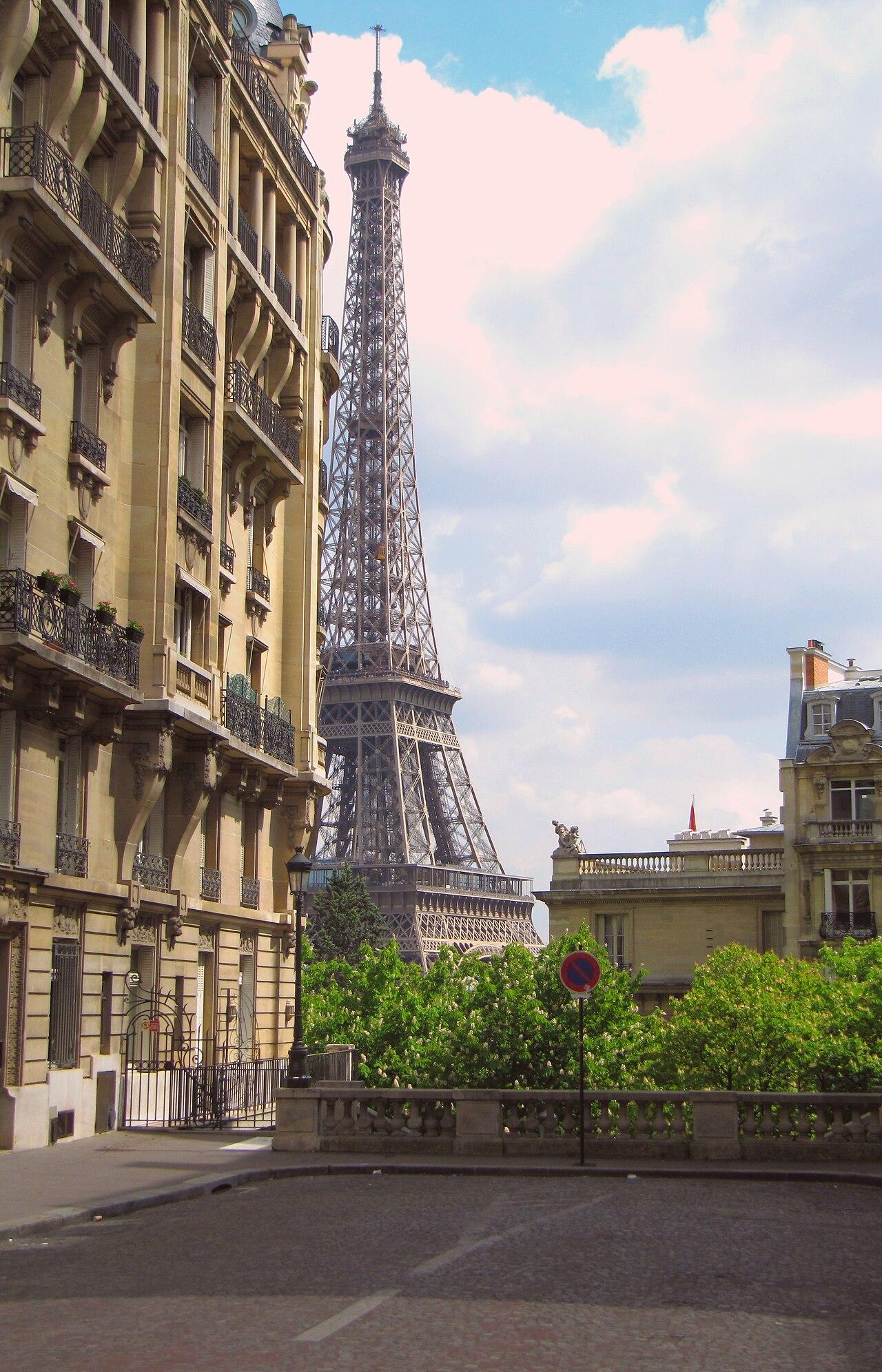 Sunrise · ESE · 102°
Photo: Gianmarco FusariCC BY 3.0 · Commons
Paris, France
Avenue de Camoens Staircase
- Best light
- Sunrise
- Compass aim
- ESE · 102°
- Where you stand
- Public street
Step two paces behind the bronze Luis de Camoes bust at the top of this quiet dead-end lane. Frame at 35mm to 50mm (1.5x to 2x on iPhone) so the curved wrought-iron railing leads past cream Haussmann stone straight into the Eiffel Tower lattice.
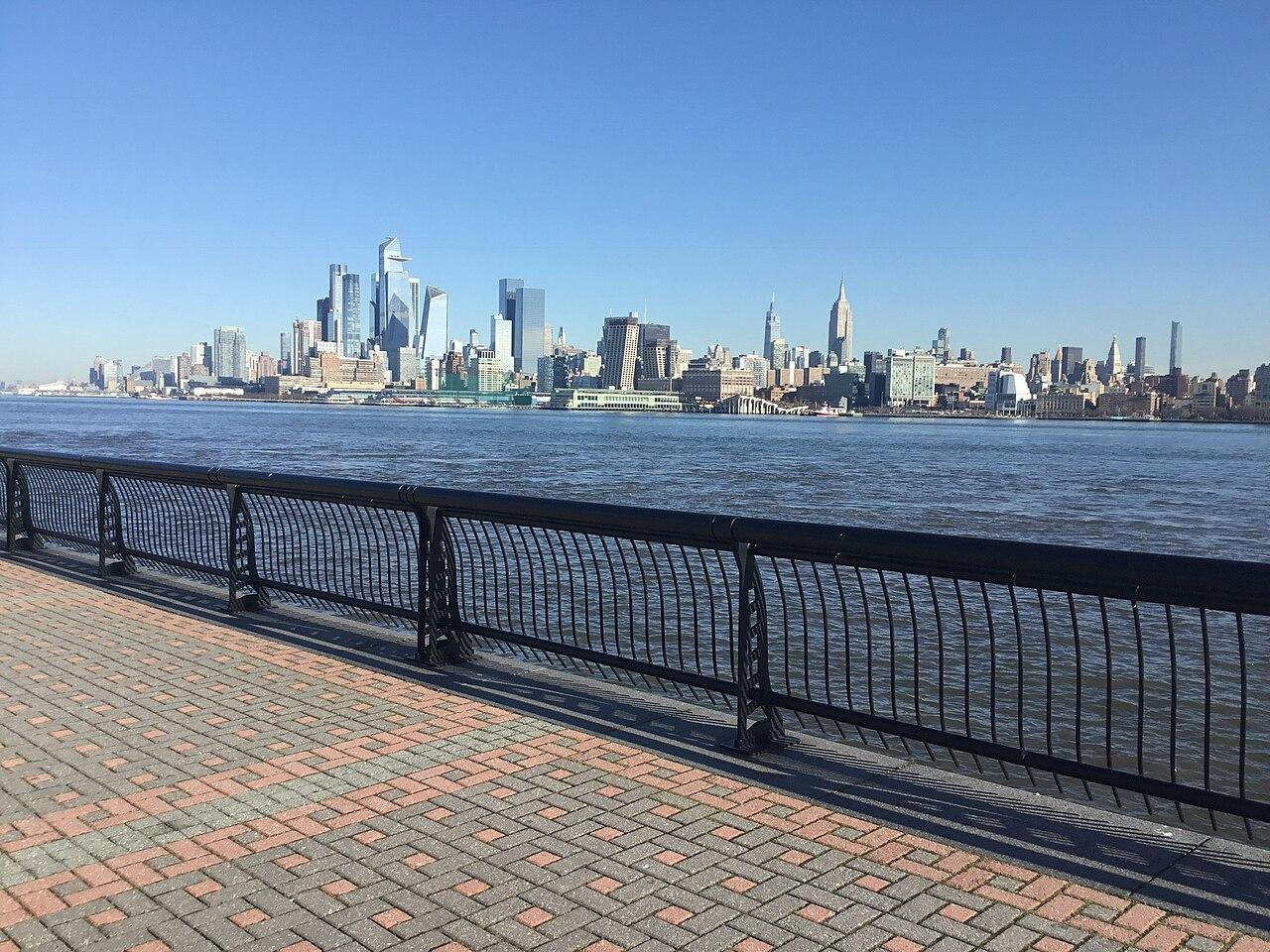 Golden hour · ESE · 115°
Photo: Kidfly182CC BY-SA 4.0 · Commons
New York, United States
Hoboken Pier A Hudson Lawn Skyline Frame
- Best light
- Golden hour
- Compass aim
- ESE · 115°
- Where you stand
- Public park
Walk to the southeast gazebo at the tip of Pier A Park beside the copper Lackawanna clock tower. In the last forty minutes before sunset, low western light behind you warms every glass curtain wall across the Hudson from One World Trade Center up toward Midtown.
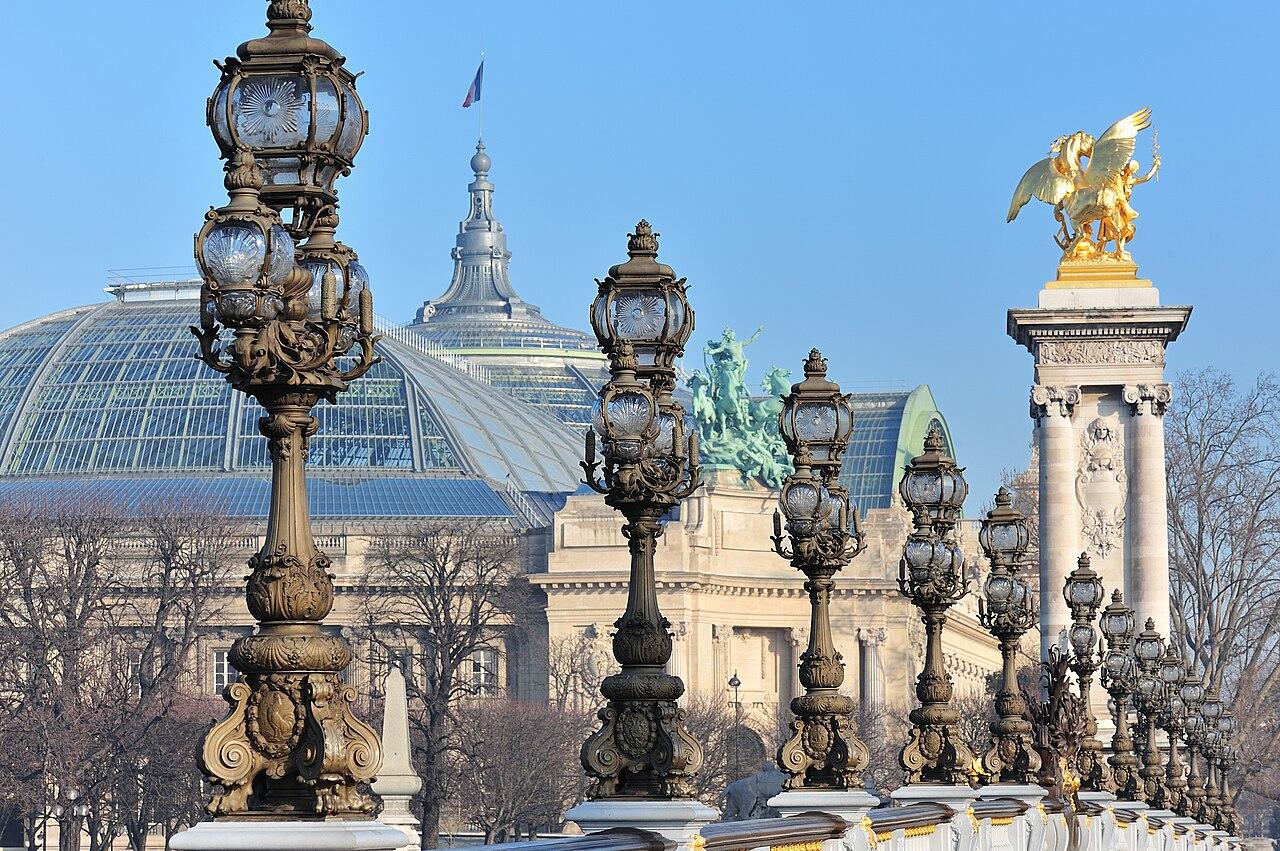 Blue hour · WSW · 249°
Photo: Eric PouhierCC BY-SA 4.0 · Commons
Paris, France
Pont Alexandre III Left-Bank Lamp Promenade
- Best light
- Blue hour
- Compass aim
- WSW · 249°
- Where you stand
- Public street
Stand on the upstream sidewalk beside the Left Bank gilded pylon twenty minutes after sunset. From that curb, the five-globe bronze bridge lamps line up diagonally toward the lit Eiffel Tower above the Seine plane trees.
Common questions
How long does blue hour last in different cities?
Duration depends on latitude and season. Near the equator, civil twilight drops through minus 6 degrees in roughly 20 minutes. In mid-latitude cities like Paris, Rome, Tokyo, and New York, balanced sky-to-streetlamp light lasts 25 to 35 minutes, while northern European summer twilights linger past 45 minutes.
Do I need mobile data to check golden hour and blue hour in Pandabout?
No. Pandabout runs offline NOAA solar equations on your iPhone using each Community Spot's latitude, longitude, and local city timezone, so today's exact clock windows appear even in airplane mode.
Should I face toward or away from the sun at city monuments?
Stand with low sun 30 to 90 degrees to your side when you want raking shadow across carved stone or ironwork. Keep the sun behind you to warm west-facing glass skylines before sunset, and aim straight toward the horizon before sunrise when you want clean tower silhouettes against dawn clouds.
Do Community Spots add leaderboard points in Pandabout?
No. Shooting a Community Spot in person uncovers 7 surrounding map tiles, counts toward your daily streak, and saves a Viewfinder Polaroid to your album with 0 leaderboard points so Game Center rankings stay tied strictly to landmark catches.
Collect the places you walk to.
Snap landmarks in person for drawn stickers, uncover map tiles block by block, and try World Pass free for 7 days.